
Mar 5 • Melanie Bedggood | Executive Director | Transformational Change Institute
The Leadership Risk When Change Fails
Most transformation efforts do not fail because leaders lack strategy, capability or intent. They fail because the environmental conditions that shape behaviour are not understood or adjusted as change unfolds.
In this article, Melanie Bedggood, Executive Director of the Transformational Change Institute, explores why sustainable transformation depends on leaders shaping the human and organisational conditions that allow change to embed under pressure. Drawing on insights from biology, complex systems research and five years of research and development behind the SIMPLE. Transformation Framework™, she examines why structural solutions alone rarely resolve transformation challenges.
In this article, Melanie Bedggood, Executive Director of the Transformational Change Institute, explores why sustainable transformation depends on leaders shaping the human and organisational conditions that allow change to embed under pressure. Drawing on insights from biology, complex systems research and five years of research and development behind the SIMPLE. Transformation Framework™, she examines why structural solutions alone rarely resolve transformation challenges.
Creating change successfully requires shaping the environmental conditions that determine whether change embeds or quietly erodes under pressure. It is not primarily a manager or a project team capability gap at the change strategy level. Project governance can track milestones, it can monitor delivery and ensure reporting disciplines are maintained. What it typically does not do, is create alignment across people and systems. However senior and change leaders can shape the critical conditions, that determine whether change adoption becomes internalised across an organisation, or merely complied with on the surface.
The Axolotl Metaphor.
A few years ago we decided to surprise my son, who has autism, with an axolotl. The intention was to give a room mate, as he spends quite a bit of time on his own. These unusual creatures are fascinating and they require a carefully balanced environment to thrive. We set up the tank with fine sand to mimic its natural habitat, clean water, the right filtration system and appropriate food. From my perspective, everything had been well considered. We had done the research, followed the advice and prepared what we believed was the right environment. At first, the axolotl thrived. But as it grew and changed, subtle problems began to appear.
On the surface, all the right elements were there. Food, water and habitat. Yet what I had not anticipated were the deeper system dynamics that began to reveal themselves over time. The big risk came when we didn't know the feeding routine required adjustment, something I had missed in my initial research. Axolotls need less food as they mature. The portion that once supported growth will undermine their health as they get bigger. I realised something was wrong when I found the wee thing floating at the top of the tank, still alive but clearly unwell. It was not that we had been careless. We had followed good advice and created what appeared to be the right environment. What we had not recognised was that conditional requirements evolve over time; what was the right amount of food became the wrong amount.
On the surface, all the right elements were there. Food, water and habitat. Yet what I had not anticipated were the deeper system dynamics that began to reveal themselves over time. The big risk came when we didn't know the feeding routine required adjustment, something I had missed in my initial research. Axolotls need less food as they mature. The portion that once supported growth will undermine their health as they get bigger. I realised something was wrong when I found the wee thing floating at the top of the tank, still alive but clearly unwell. It was not that we had been careless. We had followed good advice and created what appeared to be the right environment. What we had not recognised was that conditional requirements evolve over time; what was the right amount of food became the wrong amount.
There was no major structure issue that had increased the risk to our son's wee mate, no need for a new tank. What mattered was recognising that the environment within it needed continual observation and recalibration as the system evolved. In organisations, leaders often respond to emerging problems by redesigning the tank, restructuring teams, introducing new strategies, or launching another transformation initiative when the real issue sits within the conditions shaping how the system is functioning.
Structure and conditions must work together.
Research in complex systems and organisational learning consistently shows that adaptive performance emerges where formal structure and social conditions are intentionally integrated, rather than treated as competing forces. This is not a trade-off. It is a reciprocal relationship where each continuously shapes and reinforces the other.
Structure provides clarity, direction, and the pathways for progress. Environmental conditions shape how that structure is experienced, influencing whether people trust it, engage with it, and invest the discretionary effort required to bring it to life.
At the same time, the relationship runs in reverse. The way structure is designed, decision pathways, feedback loops, escalation points, actively shapes the conditions people experience. It determines whether trust builds or erodes, whether ownership is taken or avoided, and whether people feel safe to contribute or compelled to withdraw.
To go deeper, structure defines outcomes, priorities, and movement. Conditions determine whether those outcomes are pursued with ownership, care, and sustained energy. One sets the path. The other determines whether people will walk it and how they show up along the way. When either side is neglected, predictable vulnerability emerges. Strong structure without the right conditions leads to compliance without commitment. Strong conditions without structure creates energy without alignment. In both cases, the organisation may appear stable on the surface, yet the adaptive capacity required for transformation quietly erodes.
It is also important to recognise that the engagement goal of transformation is often framed as achieving buy-in. While alignment of intent matters, buy-in alone is not a reliable indicator of change adoption success. People can intellectually agree with a direction while continuing to operate in familiar patterns. The real test is not whether people say they support the change, but whether the conditions exist for them to adopt it in practice. When leaders focus only on buy-in as the outcome, they risk mistaking agreement for adoption. Sustainable transformation requires environments where people feel safe to engage, understand the shared meaning behind the change, and experience a genuine sense of ownership in progressing it. Sustainable transformation requires environments where people feel safe to engage, understand the shared meaning behind the change and experience a genuine sense of ownership in progressing it.
Over five years of research and development undertaken through Growth Development, a transformational research group focused on system-level change, it was repeatedly observed that sustainable transformation requires two systems to operate in tandem. This insight led to the development of the SIMPLE. Transformation Framework™, which integrates two interdependent systems that leaders must actively manage during periods of change.
The first is the People System, which establishes readiness and ownership. It shapes the measurable conditions of trust, shared meaning, belonging and psychological safety that allow change to be internalised rather than merely complied with. The second is the Transformation System, which progresses strategic priorities through disciplined execution. Through the SIMPLE. Transformation Method™, leaders clarify outcomes, measure real progress, integrate learning and maintain coherence across competing priorities as transformation unfolds.
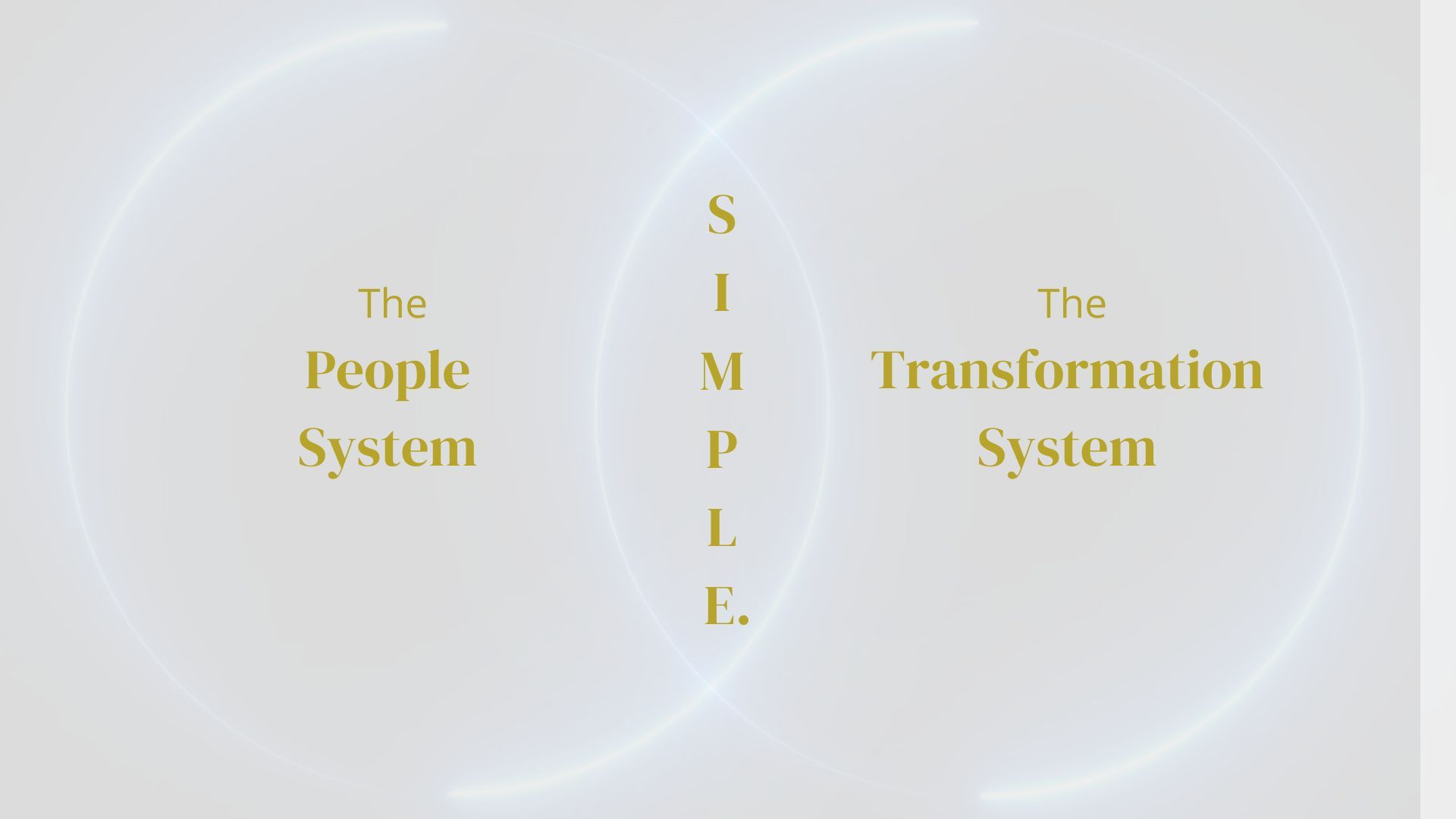
This distinction matters.
What is often missed in practice is not the importance of structure or conditions in isolation, but the dynamic relationship between them over time. Structure does more than organise work. It signals what matters. The way decisions are made, how information flows, and where accountability sits all send continuous cues about what is safe, expected, and valued. In this way, structure actively shapes the conditions people operate within. In response, those conditions influence how structure is used. Where trust and clarity are present, structure becomes enabling. It is used as intended, adapted where needed, and strengthened through feedback. Where conditions are misaligned, the same structure is often bypassed, worked around, or complied with superficially.
This is where divergence begins. On the surface, the system may appear intact. Roles are defined, processes are in place, and plans are progressing. Beneath that, however, the lived experience of the system starts to shift. Workarounds increase, signals from the edges weaken, and decision-making becomes either slowed or overly centralised.
Over time, structure and conditions move further out of alignment. Structure tightens in response to inconsistency. Conditions deteriorate in response to constraint. What began as a subtle gap becomes a reinforcing cycle. This is the point at which transformation efforts begin to stall, not because the direction is wrong, but because the system can no longer adapt at the pace required.
Seeing the Real Constraint.
Most organisations do not need another strategic reset. They need leaders who can identify the true constraint, diagnose readiness and adoption risk in real time and adjust the conditions before erosion becomes visible in performance outcomes. When leaders misdiagnose the problem, they redesign structure. When they diagnose accurately, they recalibrate conditions. That is the difference between repeated change cycles and sustainable transformation. For leaders responsible for delivering change outcomes, developing this capability is critical.
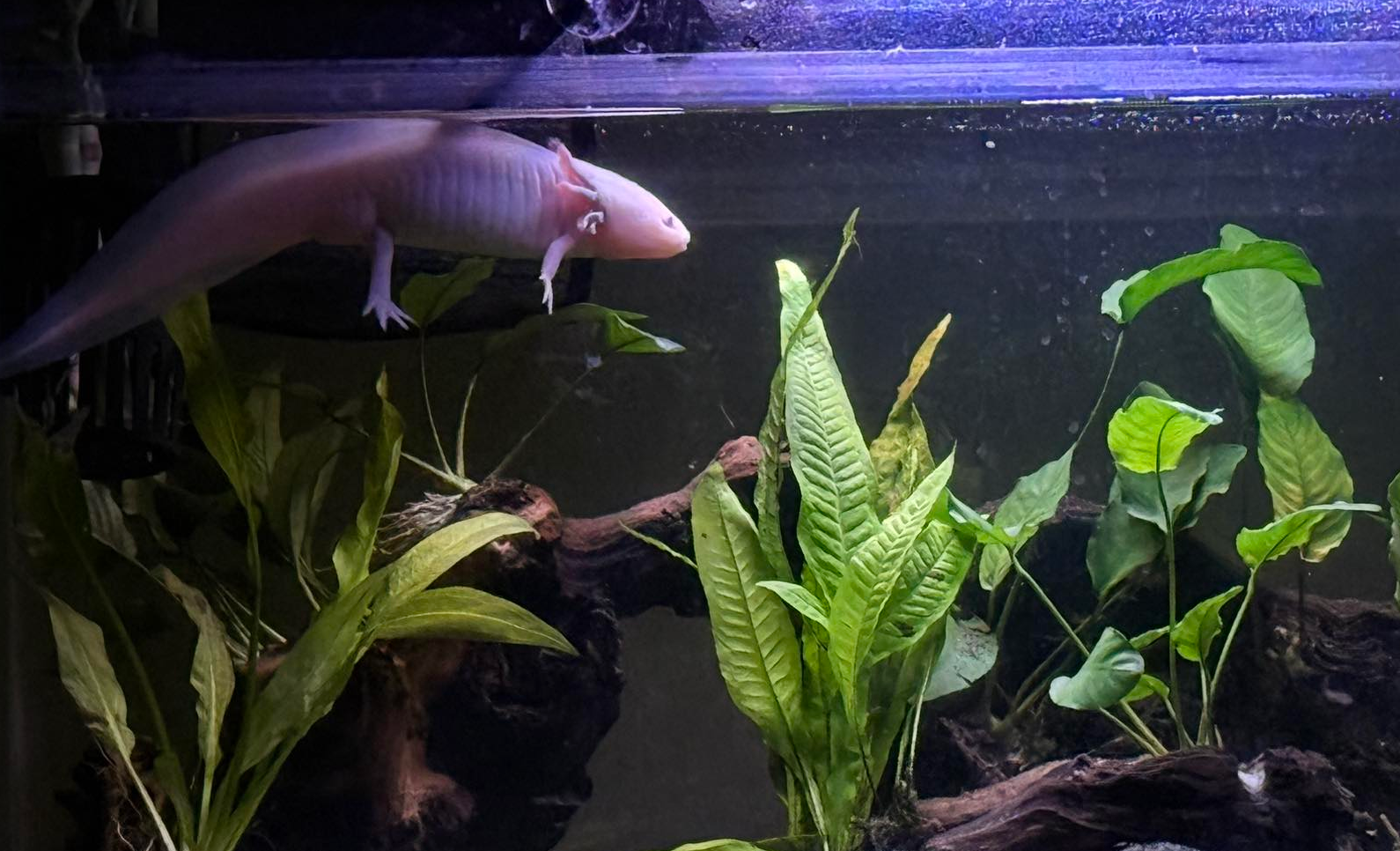
When I found the axolotl floating at the top of the tank, it was a signal that something in the environment was off. The tank itself was not broken. The system simply needed recalibration. Organisations send similar signals. You might notice momentum slowing despite clear strategy. Initiative fatigue emerging across teams. Leaders absorbing more operational pressure because ownership is not fully distributed. Conversations becoming more cautious, with fewer risks raised openly. These are often early indicators that the conditions shaping behaviour have shifted. The structure may still be in place. The strategy may still make sense. Yet something within the environment has quietly moved out of balance. The question for leaders is not always 'What should we change next?' Sometimes the more important question is 'What condition in the system needs recalibrating?
The axolotl did not need a new tank. It needed the feeding adjusted. Once I understood the cause, the correction was simple. The risk sat in not seeing it.
The axolotl did not need a new tank. It needed the feeding adjusted. Once I understood the cause, the correction was simple. The risk sat in not seeing it.
Are Your People at Risk of Floating at the Top of the Tank?
The Unity Formula™ Certified Leadership Programme introduces the leadership formula that determines whether change efforts succeed or fail. Developed through five years of research and real-world application, it enables leaders to diagnose the underlying conditions shaping change, recognising where they are strong, where they are missing, and why outcomes are unfolding the way they are.
As the leadership component of the SIMPLE. Transformation Framework™ Foundation Pathway, this one-day certified programme focuses on building clarity before action. It provides leaders with a practical lens to understand how environment drives behaviour, engagement, and ultimately change adoption.
Rather than jumping straight to solutions, leaders learn to recognise the system they are operating within, identifying the conditions influencing performance, resistance, and momentum. Delivered through the Transformational Change Institute (TCI), the programme equips leaders to move beyond managing change activity, to accurately diagnosing the conditions that determine whether change will be adopted and sustained.
Find out more below.
Subscribe to our newsletter
Thank you!
Policy Pages
Copyright © 2026
Created with